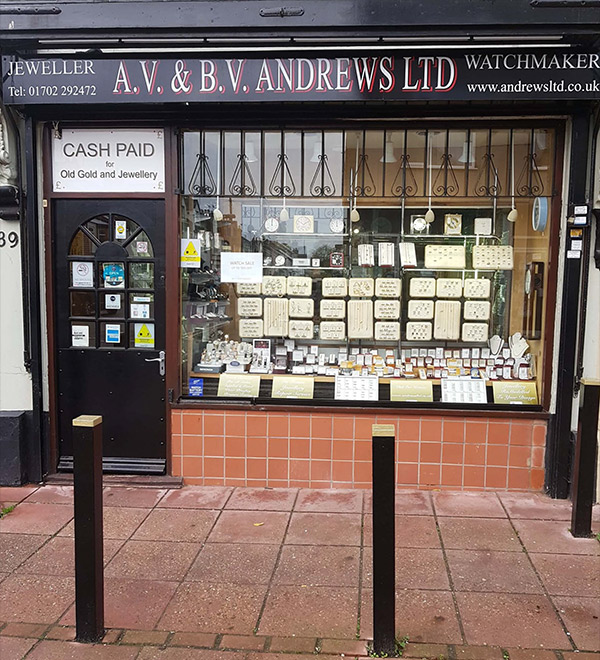
|
| |
|
Members of the
British Watch & Clockmakers
Guild |
|
|
Members of the
National Association of Goldsmiths
|
 |
|
A diamond is the hardest naturally occurring substance known
to man. In ancient times Man was so enraptured by the beauty
of this gem stone it was thought that they were tears of the
Gods.
A diamond in its natural state is a fairly unimpressive thing
to look at, it is only after the stone has been mined, cut and
graded is it turned into the wonderful
gemstone that is used
in the desirable pieces of jewellery that we see in jeweller’s
window displays.
To grade a diamond we must acknowledge what is known as The
Four Cs.
These are Colour, Clarity, Cut and Carat weight.
Colour: When we talk of colour we are referring to how “white” a
stone is, diamonds do occur in other colours but these are known
as “fancy” stones.
Clarity: This is relating to the presence (if any) of inclusions
in the stone.
Cut: This means how well the stone has been cut, not shape of
stone.
Carat Weight: This is how big the stone is, a carat is made
up of 100 “points”, incidentally a carat is derived
from the relatively uniform weight of the Carob seed.
Nowadays we also talk about a fifth C this is the certificate,
a certificate is usually obtained for larger stones typically
33 points upwards. A certificate is issued by an independent
gem laboratory and states what grade the diamond falls into.
Single stone rings / Diamond cluster rings / Diamond & gold
eternity rings / Platinum wedding rings / Diamond earrings /
Diamond pendants / Platinum pendants / Gold chains / Heavy gold
chains / Gold bracelets / Silver jewellery / Emerald jewellery
/ Sapphire jewellery / Ruby jewellery / Ladies & Gents watches.
Diamond jewellery direct from Hatton Garden
Bespoke rings, chains & bracelets.